 sendall
Send Stellar payments to thousands of people at once
Upload a list of addresses and amounts. sendall checks every address, groups them into transactions automatically, and sends, all signed from your own wallet.
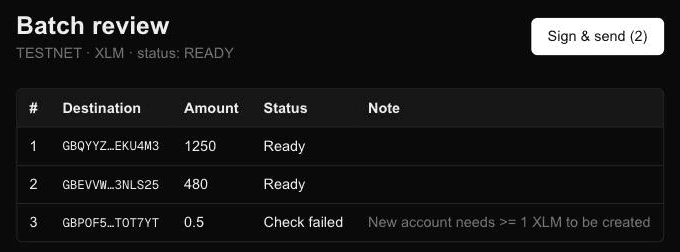
Real batch, Stellar Testnet, unedited.
How it works
Add your recipients
Paste or upload a CSV with destination addresses and amounts.
We check every address
Format, validity, and duplicate rows are flagged before anything else happens.
We confirm the account is live
Each address is checked on-chain, so you're not paying to send to one that can't receive it.
We batch it, you sign
Recipients are grouped into transactions automatically. You approve once per group, in your own wallet.
Every check runs before you sign. A bad address gets caught up front, not after you've already paid for it.
Why sendall
No manual checking
Every address and account is verified automatically, before you send anything.
Built for scale
Send to hundreds or thousands of recipients without batching transactions yourself.
You stay in control
sendall never holds your funds or your keys. Every payment is signed in your own wallet.
No platform fees
You only pay the Stellar network's own fee, a fraction of a cent per transaction. sendall doesn't add a service fee on top.
Your funds, your keys
sendall builds each transaction but never signs it. You approve every payment yourself, from a wallet you already trust.
Works with Freighter, xBull, Albedo, Lobstr, Rabet, Hot Wallet.
Ready to send your first batch?
Connect your wallet and upload a recipient list to get started.
Open app